Behind the Screen

SIGNAL COMPROMISED BY CORRUPTION

Behind
the Screen

A visual public explainer for Albania’s transition, clientelism, organised crime, corruption and the justice reform built to confront the old immunity wall.

You were told
SPAK has failed.
Signal compromised
Look
closer.
Second layer
The screen hides
the whole
story.
Distorted frame
Justice exposes
what power
hides.
Verify the file

WHAT THIS SITE EXISTS TO EXPLAIN

The captured screen.

Albania’s most trusted institutions are the ones its largest television channels attack every evening. The arithmetic explains why.

In every published poll over the past five years, Albanian citizens place SPAK and the Vetting commissions among the most trusted institutions in the country. International monitors describe the same reform as one of the most substantive judicial rebuilds attempted in any candidate state in the Western Balkans. The European Council made it a precondition for opening accession negotiations. The United States Department of State has flagged it in successive INCSR reports as the central pillar of Albania’s rule of law trajectory. MONEYVAL, Freedom House, V-Dem, the European Commission’s progress reports, and the major independent observers have all reached versions of the same conclusion. The reform is real, it is producing results, and it is the most consequential institutional change in post-communist Albania.

And yet, on most Albanian television channels, every evening, those same institutions are presented as compromised, partisan, captured, biased, foreign-controlled, or hostile to ordinary citizens. The political class repeats the message in parliament, in press conferences, in interviews on the same channels. The gap between what the country and its partners think of the reform and what the captured screens say about it is one of the widest documented gaps in any European democracy.

This is the trust gap. It is not an accident. It is engineered.

The arithmetic explains how.

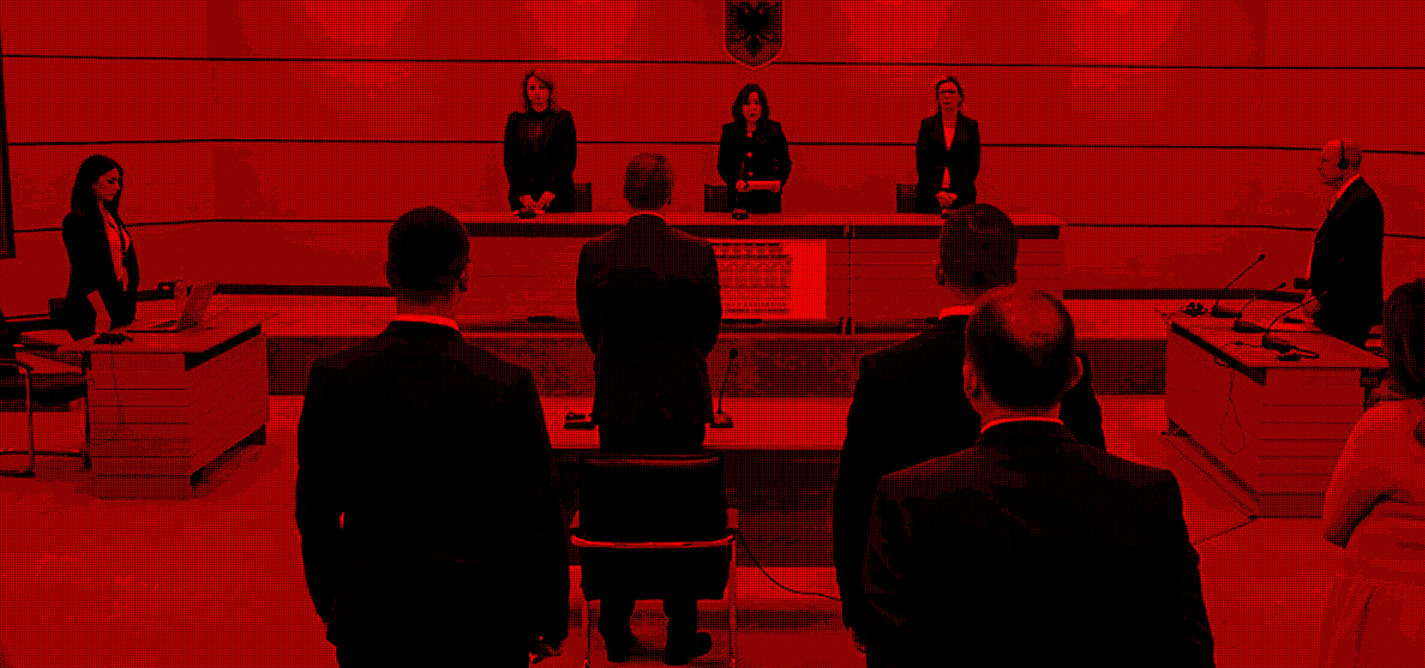
Vetting process hearing in an Albanian courtroom

Money flow Width = relative annual scale

The Albanian advertising market is small. Estimates by the Albanian Media Institute and industry sources place total annual spend across all media, television, print, radio and digital, at roughly thirty to fifty million euros. The country has more than a dozen major television channels and dozens more news portals competing for that pool. A single mid-size European broadcaster spends more than fifty million euros on news production alone, in one year, in one country.

The major Albanian channels are not viable businesses on advertising revenue alone. They cost much more to run than they bring in. They employ several hundred staff each. They produce expensive prime-time political programming, with high-paid presenters, large studios, multiple correspondents, and daily evening commentary on government, opposition, and the justice reform. None of that infrastructure can be paid for by the advertising market it sits in. The arithmetic does not balance.

So the question that follows is the only question worth asking. Who pays the difference? Who finances the prime-time political programme that attacks SPAK every evening, in a market where the advertising revenue would not cover a fraction of its cost?

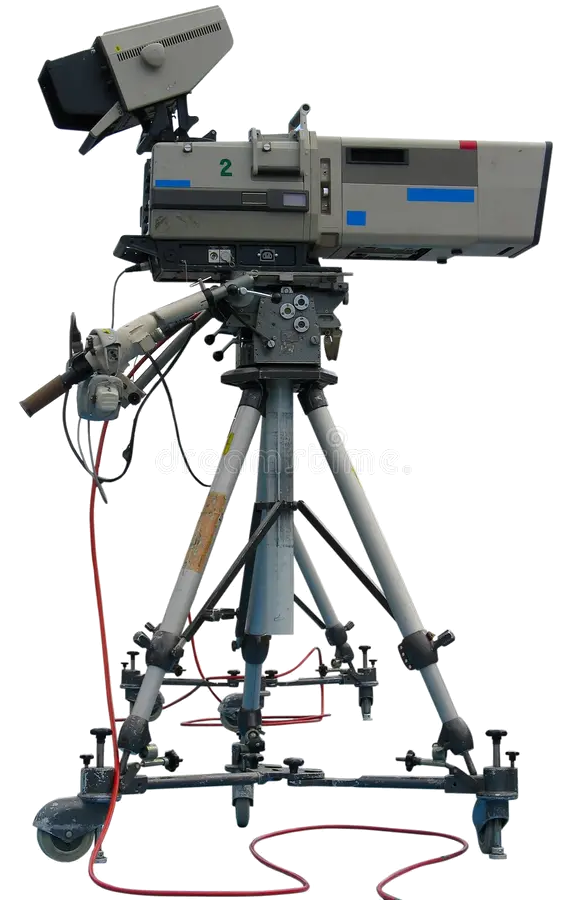
Professional television studio camera

01 / WHY THIS FIGHT

Strategic lens / why the campaign exists

The last battle. An industry defending itself.

Why they fight SPAK

The Justice Reform threatens the architecture that makes the political business model possible. Without SPAK, that architecture stays intact. With SPAK, it starts to break. That is the actual fight.

At first, the campaign tried to make SPAK look owned: by a businessman, by a party, by foreign interests, by whoever could make the public doubt the institution. But the results complicated that story. SPAK began touching figures from different political sides, different offices and different levels of power. The cases were not built on slogans. They were built on files, assets, contracts, communications, court procedures and financial traces.

So the narrative changed. In a controlled media environment, the campaign moved from ‘SPAK belongs to them’ to personal attacks, intimidation and the claim that justice is interfering with politics. But a vote is not immunity. Winning power does not legalise corruption. And money created through corruption does not become democratic legitimacy because it is later used to buy influence, media protection or votes. If stolen money can buy the political machine that protects the theft, then elections become a laundering mechanism for power.

A senior politician in the Albanian system has often held two roles at the same time. The first is political: the office, the ministry, the seat in parliament. The second is commercial. Through family members, party-aligned businessmen and silent partners, the same political circle can be connected to construction companies, port operators, energy concessionaires and the television channels that protect both. Each commercial role depends on state licences, public tenders and government contracts. The political role produces the licences and contracts. The commercial role is where the money lives. The television channel is the defensive instrument that keeps either side of the architecture from being investigated. The office, the company and the screen are not always separate. In this model, they behave like one integrated business.

Independent justice does not attack only one part of that business. It dissolves the connections between the parts. Public contracts have to be awarded on merit. Proxy ownership becomes harder to hide. Regulators must act independently. A judge who covered the file is no longer guaranteed to be there. A vetted judge is harder to pressure. The architecture stops working as a single business. The television channel has to live as a media company. The construction company has to compete. The minister becomes a minister, not the chief executive of an invisible holding company. For the citizen, this is the country we are trying to build. For the people who own the architecture, this is the end of the business.

That is why the fight is so aggressive. This is not only a fight over prosecutions. It is the last battle of a business model. Many television networks and business groups that promote narratives against justice reform understand what is at stake: if independent justice becomes normal, the old economy of licences, tenders, protection, pressure and impunity can no longer function at the same level. In a country ruled by law, media has to compete as media, companies have to compete as companies, and politicians have to survive as politicians — not as managers of an invisible commercial machine.
The architecture

Office, company, screen and courtroom can operate as one closed loop.

Closed-loop architecture of political role, state licences, construction and energy interests, television channel and courtroom outcome A diagram showing how political office, public tenders, construction and energy companies, a television channel and courtroom outcomes can operate as one closed loop, with money flow, influence and narrative-capture connections. STATE LICENCES Public tenders, permits CONSTRUCTION / PORT Energy concession TELEVISION CHANNEL Defensive instrument COURTROOM File, delay, decision POLITICAL ROLE Office, ministry, seat in the system as it operates today 01 × 02 × 03 × 04 × 05 × 06 × 07 × 08 ×
  1. 01
    Issues.Political role issues state licences and signs public tenders to favoured firms.
  2. 02
    Feeds.Licences and tenders feed revenue to construction, port and energy concession companies.
  3. 03
    Finances.Company revenue returns to the political role through campaign finance, party loyalty and silent partners.
  4. 04
    Pays for.Construction and energy revenue finances the television channel that protects the architecture.
  5. 05
    Controls the story.The television channel broadcasts the version that protects the political role.
  6. 06
    Frames the verdict.Captured media manufactures public legitimacy for courtroom outcomes.
  7. 07
    Protects.Courtroom decisions shield the political role from prosecution.
  8. 08
    Signals safety.Court decisions reassure that licences will not be reopened or investigated.
Money Influence Narrative capture

Diagram describes documented incentive structures, not a claim about any one individual.

State of the system Architecture intact
Political role issues licences State licences and tenders feed revenue Construction, port, energy concession finances the screen Television channel controls the story Courtroom outcome protects the political role

The three moves

The campaign is repetitive because the incentive is repetitive: bury the result, discredit the messenger, wear down the institution.

Outdoor television antenna

Bury the result.

When a major SPAK action happens, the easiest way to weaken it is not to deny it. It is to bury it. Lead with ceremony, not accountability. Cover the arrest for a day, then move on. The story disappears not through argument, but through absence.

Coverage comparison. Data to be inserted.

Make the messenger doubtful.

SPAK can be called partisan, foreign-controlled, incompetent and a tool of the opposite party, sometimes in the same week. The claims do not need to agree with each other. The goal is doubt. If the citizen no longer knows what to believe, disengagement becomes the victory.

Contradictory claims archive. Source-locked archive pending.

Wear the institution down.

The pressure does not need one fatal blow. It can work through repetition: public attacks, budget pressure, legal changes, refusal to cooperate, delays, personal attacks on prosecutors and constant noise. The goal is exhaustion.

Pressure timeline. To be built from public records.

This is what this site exists to make visible. SPAK has been winning case after case, and much of the country, watching the captured channels, has not been told the full story. The success is real. The campaign against the success is the story. We did not build this site to argue for a party. We built it to publish what the captured channels will not publish. The architecture above is what the campaign is defending. Everything else on this page is the evidence that the architecture is starting to fail.

A PROJECT OF PËRPJEKJA PËR BE Next: How Albania arrived here

02 / ORIGIN STORY

How Albania arrived here

Before SPAK, there was a system. To understand why justice reform mattered, you have to understand the world that produced it: dictatorship, collapse, clientelism, captured institutions, media protection, broken courts and the outside pressure that forced a new architecture of justice.

Seven scenes. Three decades. One question: how did impunity become normal?

03

PUBLIC CASE FILES / POLITICAL ACCOUNTABILITY

THE IMMUNITY WALL

For decades, power in Albania often looked untouchable. These public SPAK cases show how the wall began to crack. Click a card to see the public accusations, SPAK action and current legal status.

04

CHOOSE THE PATH

Two systems protected each other: organised crime needed access, and corrupt power needed money, silence and control.

05

ORGANISED CRIME IS NOT ONLY VIOLENCE.
IT IS LOGISTICS.

Illicit organisations survive because they operate like systems: routes, people, money, protection, communications and laundering.

Map prototype / source-reported patterns

THE OPERATING MAP

Organised crime is geography: source countries, ports, transit points, money routes and safe-haven locations. This map shows source-reported patterns, not live operational routes.

MAP 01

COCAINE ROUTES

Latin America → European ports → Albania / Balkans → laundering and safe-haven nodes

MAP 02

CALL CENTER FRAUD NETWORK

Tirana and other hubs → EU victims → cross-border investigation → searches, arrests and digital evidence

MAP 03

ILLEGAL BETTING NETWORK

Lokale, phones, online accounts, blocked domains and regional enforcement patterns

MAP 04

ORGANISED CRIME LANDSCAPE

Regional strongholds, criminal patterns and source-linked ecosystem signals across Albania

ORGANISED CRIME / SYSTEM MODULES

THE CRIME OPERATING SYSTEM

Organised crime is not one activity. It is a system of markets, routes, protection, violence, communications and money movement. Open a module to see how each part works.

This section explains criminal structures and investigative patterns for public-interest education. It does not provide operational instructions, live routes, private addresses, evasion methods or tactical guidance.

06

CORRUPTION IS NOT ONLY AN ENVELOPE.
IT IS A SYSTEM OF LOYALTY.

Political corruption can operate as a loop: loyalty, appointments, contracts, money, media influence and votes reinforce each other.

Closed files / mechanism dossiers

POLITICAL CORRUPTION MECHANISMS

Corruption is not only an envelope. It is a system of decisions, contracts, loyalty, protection and money movement. Open a file to see how each mechanism works.

07

DOCUMENTS MADE CLEAR

This site will translate technical SPAK reports, court documents and official statements into plain public language.

Original document

Source file placeholder

SPAK reports, court decisions, official press releases and public records will be source-locked here before publication.

Plain-language summary

What it says

  • Why it matters
  • Legal terms explained
  • Current status
  • Sources